In the spirit of the season, Alexis Antiques and Collegeplates.com
are offering FREE SHIPPING on all orders between Friday morning and Monday evening. Check out our websites for lots of good ideas for Christmas gifting for all those lucky enough to be on your shopping list! Happy Thanksgiving!
Wednesday, November 27, 2013


Sunday, November 24, 2013
Thanksgiving Wishes to our Wedgwood Friends

Monday, October 14, 2013
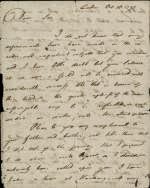
JOSEPH PRIESTLEY CORRESPONDENCE located in USA - including letter to THOMAS WEDGWOOD

Tuesday, October 8, 2013
The Roundhouse at Etruria, a bit of Wedgwood history
From our favorite UK newsmedia, The Sentinel, we bring you this interesting historical article. The link to the original article is: http://www.thisisstaffordshire.co.uk/Way-roundhouse-Etruria/story-19890891-detail/story.html#axzz2hBwPQSGk but there is an annoying ad with sound. You can click on the symbol in the lower left of the ad and it should shut off the sound. The article below is from that link sans sound:

Way We Were: The roundhouse at Etruria
Saturday, October 05, 2013
MADAM, – With reference to Micheal
Pritchard's picture [above] of the Roundhouse at Etruria in The Way We Were on
September 21.
This originally was one of a pair
that flanked each side of the facade of the Etruria factory that Josiah
Wedgwood completed in June 1769.
A simple sketch of these
roundhouses by Josiah, along with other styles, was included in a letter he
wrote to his business partner Thomas Bentley on Christmas Eve 1767.
One unusual feature of the old
factory was that the facade faced the canal rather than the main road.
This was so that important visitors
received by Josiah at Etruria Hall would have had a view of the factory before
being shown around it.
The roundhouse that did not survive
housed one of the ornamental ware glost ovens. However, the use to which the
surviving one was put is less certain and suggestions include a hovel for
another oven, a grinding mill and a stable.
By the 1850s plans were drawn up to
have the building converted into a cottage and rented to one of the Wedgwood
employees, although this never materialised.
Even before the 20th century the
Wedgwood factory had suffered from subsidence due to the extensive mining in
the area.
This caused problems with drains,
the constant flooding of cellars during wet weather, and the sagging and
buckling of the tracks of the newly installed tunnel kilns.
In addition to subsidence, air
pollution was another problem.
Smoke from trains climbing the
gradient of the loop line and iron filings drifting up from Shelton Bar were a
constant cause of ware being speckled.
The question of finding a new
location for the factory was first addressed at a meeting of the board of
directors on November 26, 1935.
The proposal to relocate was
announced to the workforce at a lunchtime meeting in the canteen on Friday May
14, 1936.
The news was broken by Josiah
Wedgwood V, who confirmed that due to the severity of subsidence relocation was
inevitable, and that the company had purchased an estate at Barlaston where the
new factory would be built.
He spoke of the ideal working
conditions that the new factory would offer, the sporting facilities and the
estate of houses that would be built, painting a promising picture to the
workforce.
The huge task of transferring the
works from Etruria was accomplished in two halves.
Only the earthenware and Jasper
departments moved to Barlaston in 1940.
China production remained at the
old factory until 1947 and accounted for a large proportion of the workforce.
The majority of the old factory not
used for china production was utilised for the storage of moulds and dismantled
machinery. Certain areas had been leased out to other companies for storage
premises and included the Dunlop Rubber Company and Shelton Bar.
From the beginning of the 50s the
old Wedgwood factory had gone through several occupants, steadily becoming more
dilapidated.
During the early 60s it suffered
from vandalism. By this time the factory was in the hands of St Quentin
Properties which planned to demolish those parts of the works not deemed by the
Ministry of Housing as being of particular historic interest, and to use the
land as a light industrial estate.
The original intention was to
preserve the original office block of 1769, two bottle kilns behind the main
building and the roundhouse immediately to one side of it.
Attempts to raise both sufficient
interest and capital failed, however, and demolition of the Wedgwood factory
took place during September 1965.
All was cleared away, the only
building spared being the Roundhouse that still exists on the site today.
KEVIN SALT Longton
Saturday, September 21, 2013
COLOURFUL WEDGWOOD, DAPPER AND DREAMY
Our friend Lord Wedgwood of Barlaston is on the road in his continuing crusade to inform the world of the beautiful new patterns of Wedgwood china. Check out how handsome he looks amidst the beautiful china at Bloomingdales, Boca Raton! Word has it that he's on his way back to HQ in Barlaston before long, so the folks in Florida should enjoy him while he's in this hemisphere! You can go here to read all about his visit, and an interview with him about Wedgwood, its products, history and coming events!


Tuesday, July 23, 2013
INTERESTING CANALSIDE VIEW OF WEDGWOOD BARLASTON PLUS MORE - CANAL BOATS
Here is an interesting view of the Barlaston Wedgwood factory from the Trent & Mersey Canal, of course that's the waterway that Josiah created to help get his, and others', goods from Stoke to their markets in other parts of the world. If you wander around this great blog you'll likely learn something new, I sure did. I know about canals, and skinny boats, but did not know there is a whole narrow boat culture out there. But for us Wedgwood fans there are a couple of great photos on this blog of scenes one doesn't normally get to photograph at the factory. Do enjoy this blog and think how amazed Josiah would be if he could know what great things would float up and down "his" canal all these years later!
Tuesday, July 16, 2013
TRAITOR BENEDICT ARNOLD, AFICIONADO OF WEDGWOOD - WHO KNEW?
Recently I won a book through Fieldstome Common History Radio, a web-based radio show all about genealogy and American History. The book I won is "Defiant Brides, the Untold Story of Two Revolutionary-era Women and the Radical Men They Married". This is the story of the parallels in time and place of Peggy Shippen Arnold, Mrs. Benedict, and Lucy Flucker Knox, Mrs. Henry. It is a well-written biography of two strong women who found themselves on the main stages of America's history during the American Revolutionary period.
As we Wedgwoodians so often find, one just never knows where a Wedgwood reference will pop up. It happens to many of us frequently and we share our encounters with one another in many ways. This one is another on my long list of Wedgwood-in-totally-unexpected-places finds. On page 136 we learn: "Superficially, the Arnolds' social success in London society in 1782 seemed ensured. Though not fabulously wealthy, the Arnolds lived luxuriously. Their townhouse was outfitted with fine mahogany furniture; their table handsomely appointed with fine silver, crystal, and Wedgwood..." And on page 155 we find Benedict and Peggy back on the North American continent, in St. John, New Brunswick, Canada. "The Arnolds' clapboard home on the corner of King and Cross (now Canterbury) streets was less stately than their London townhouse but, by Saint John standards, still impressive. Two and a half stories high with a gambrel roof, it symbolized Arnold's status as a town father. Within it stood the family's London furnishings, blue-damask sofas, matching curtains, mahogany chairs cabinets and chests, Wedgwood dishes, giltware, and a globe." Who knew someone so vilified in our history could have the good sense and good taste to own Wedgwood china? Perhaps we can't excuse his poor behaviour but we can at least give him a modicum of credit for his good sense in some of life's luxuries.
For an interesting look into the personal lives of two important players on the Revolutionary stage, you might want to check out Nancy Rubin Stuart's book, Defiant Brides, published by Beacon Press, Boston, 2013, www.beacon.org. And a big thank-you to Marian Pierre-Louis and her stellar programming on Fieldstone Common for running the give-away! You can learn a lot of history and genealogy at www.blogtalkradio.com/FieldstoneCommon.

Friday, July 12, 2013
HAPPY BIRTHDAY JOSIAH WEDGWOOD -GOING STRONG AT 283!
Here is a nice post we found this morning which talks a lot about Josiah and why we are still telling him Happy Birthday 283 years later! (I'm not sure the links work, but at the bottom are some excellent references.) Be sure to see our website for lots of Josiah's company's wares and lots of INFORMATION about Wedgwood! Remember to learn about what you collect, information is power!
 
Etruria Hall, the family home, built 1768–1771 by Joseph Pickford. It was restored as part of the 1986 Stoke-on-Trent Garden Festival and is now part of a four-star hotel.
BiographyEarly lifeBorn in Burslem, Staffordshire, England, the twelfth and last child of Thomas Wedgwood and Mary Wedgwood (née Stringer; d. 1766), Josiah was raised within a family of English Dissenters. He survived a childhood bout of smallpox to serve as an apprentice potter under his eldest brother Thomas Wedgwood IV. Smallpox left Josiah with a permanently weakened knee, which made him unable to work the foot pedal of a potter's wheel. As a result, he concentrated from an early age on designing pottery rather than making it.In his early twenties, Wedgwood began working with the most renowned English pottery-maker of his day, Thomas Whieldon. He began experimenting with a wide variety of pottery techniques, an experimentation that coincided with the burgeoning of the nearby industrial city of Manchester. Inspired, Wedgwood leased the Ivy Works in his home town of Burslem. Over the course of the next decade, his experimentation (and a considerable injection of capital from his marriage to a richly-endowed distant cousin) transformed the sleepy artisan works into the first true pottery factory. Marriage and childrenWedgwood married Sarah Wedgwood (1734–1815), his third cousin, in January 1764. They had seven children:
Work
1780 Wedgwood dish
By 1763, he was receiving orders from the highest levels of the British nobility, including Queen Charlotte. Wedgwood convinced her to let him name the line of pottery she had purchased "Queen's Ware", and trumpeted the royal association in his paperwork and stationery. In 1774, Empress Catherine of Russia ordered the Green Frog Service from Wedgwood; it can still be seen in the Hermitage Museum.[2] An even earlier commission from Catherine was the Husk Service (1770), now on exhibit in Petergof. As a burgeoning industrialist, Wedgwood was a major backer of the Trent and Mersey Canal dug between the River Trent and River Mersey, during which time he became friends with Erasmus Darwin. Later that decade, his burgeoning business caused him to move from the smaller Ivy Works to the newly-built Etruria Works, which would run for 180 years. The factory was so-named after the Etruria district of Italy, where black porcelain dating to Etruscan times was being excavated. Wedgwood found this porcelain inspiring, and his first major commercial success was its duplication with what he called "Black Basalt". 
Bust of Minerva, Wedgwood and Bentley, c. 1795
In the latter part of his life, Wedgwood's obsession was to duplicate the Portland Vase, a blue and white glass vase dating to the first century BC. For three years he worked on the project, eventually producing what he considered a satisfactory copy in 1789. After passing on his company to his sons, Wedgwood died at home, probably of cancer of the jaw, in 1795. He was buried three days later in the parish church of Stoke-on-Trent. Seven years later a marble memorial tablet commissioned by his sons was installed there. He belonged to the fourth generation of a family of potters whose traditional occupation continued through another five generations. Wedgwood's company is still a famous name in pottery today (as part of Waterford Wedgwood; see Waterford Crystal), and "Wedgwood China" is the commonly used term for his Jasperware, the blue (or sometimes green) china with overlaid white decoration, still common throughout the world. He was an active member of the Lunar Society often held at Erasmus Darwin House and is remembered on the Moonstones in Birmingham. He was elected to the Royal Society in 1783 for the development of a pyrometer. Wedgwood is credited as the inventor of modern marketing, specifically direct mail, money-back guarantees, traveling salesmen, self-service, free delivery, buy one get one free, and illustrated catalogues.[3] Am I Not A Man And A Brother?
Am I Not a Man and a Brother? Design of the medallion created as part of anti-slavery campaign by Wedgwood, 1787
The design on the medallion became popular and was used elsewhere: large-scale copies were painted to hang on walls[8] and it was used on clay tobacco pipes.[9] LocomotiveA locomotive was named after Josiah Wedgwood and ran on the Churnet Valley Railway.[10]See also
References
Sources
External links
This article is copied from an article on Wikipedia®
- the free encyclopedia created and edited by its online user
community. The text was not checked or edited by anyone on our staff.
Although the vast majority of Wikipedia® encyclopedia articles provide
accurate and timely information, please do not assume the accuracy of
any particular article. This article is distributed under the terms of GNU Free Documentation License.
Want to thank TFD for its existence? Tell a friend about us, add a link to this page, add the site to iGoogle, or visit the webmaster's page for free fun content. Link to this page: Please bookmark with social media, your votes are noticed and appreciated: |
|||||||||||||||||||||

Thursday, June 20, 2013
ERIC RAVILIOUS - WEDGWOOD ARTIST AND DESIGNER STILL A TOPIC OF INTEREST
Even after all these years since his tragic death off the coast of Iceland during World War II, Eric Ravilious' work is still commanding attention and landing positions in Wedgwood collections around the world! Interest in his style and talent still commands print space on the internet, in Wedgwood and arts publications, and his wares are gaining popularity. Check out this recent article to follow the current success of this designer and artist from a generation mostly now gone by. There is an error in this article, if one does the math it'll quickly be seen that he wasn't born in 1927 as stated, but in 1903. There is a fairly short but interesting entry about him on Wikipedia which begins:
Eric William Ravilious (22 July 1903 – 2 September 1942) was an English painter, designer, book illustrator and wood engraver. He grew up in Sussex, and is particularly known for his watercolours of the South Downs. He served as a war artist, and died when the aircraft he was on was lost off Iceland.
One can Google his name and learn a lot about his life and work.
Tuesday, June 18, 2013
LATEST NEWS ON PLANS FOR THE WEDGWOOD BARLASTON CAMPUS
After not having seen any new information on this topic lately, I find this today which shows great promise that the Wedgwood Barlaston campus will likely have a great future. What a shot in the arm for the Stoke area, Barlaston and Wedgwood if this development were to become reality in coming years! Click here to see an artist's rendering and read the article.
Subscribe to:
Posts (Atom)